Seeing Desktop Window Manager near the top of Task Manager can be unsettling, especially when you’re not actively doing anything. It often feels like the system is wasting effort on something invisible.
In most cases, though, this behaviour is expected.
Desktop Window Manager, often shown as dwm.exe, is responsible for drawing everything you see on the screen. Any time a window moves, resizes, fades, or refreshes, DWM is involved.
What Desktop Window Manager Actually Does
Modern versions of Windows don’t draw windows directly anymore. Instead, DWM sits in the background and manages how everything is displayed.
That includes things like:
Window animations and transitions
Transparency and visual effects
Scaling across multiple monitors
Keeping the desktop responsive while apps update
Because of this, DWM is always running, even when the PC looks idle.
Why DWM CPU Usage Can Increase
DWM CPU usage usually rises briefly when the display changes in some way. Common triggers include:
Opening or closing multiple windows
Using more than one monitor
Waking the PC from sleep
Background apps updating their interface
Visual refreshes while the system is otherwise idle
When this happens, Windows is simply redrawing parts of the screen. Once the update finishes, CPU usage normally drops again.
Why It Often Looks Worse Than It Is
When nothing obvious is happening, any background activity feels suspicious. Seeing DWM using CPU with no visible app to blame can make it feel like something is wrong.
In reality, this is often just Windows tidying up visual tasks during quiet moments — similar to other background activity that runs while the system is idle.
Why Task Manager Can Be Misleading Here
Task Manager updates in snapshots. You might catch DWM during a brief spike, even though it only lasts a second or two.
That snapshot can make the usage look more serious than it really is, especially if you check Task Manager right after waking the PC or switching windows.
When DWM CPU Usage Is Usually Normal
DWM activity is usually nothing to worry about if:
CPU usage rises briefly, then settles
The PC feels responsive during normal use
Fans quieten down after a short time
In these cases, Windows is behaving as intended.
When It’s Worth Looking Closer
It’s less normal if:
DWM stays near the top of CPU usage for long periods
That can sometimes point to a graphics driver issue or a background app repeatedly forcing screen updates.
What Not to Do
It’s tempting to disable visual effects or start forcing “performance tweaks”. These often make the desktop feel worse without fixing the underlying cause.
DWM itself is not something you should try to disable.
Final Thoughts
Desktop Window Manager using CPU is usually just part of how Windows draws and refreshes the desktop. Short bursts of activity are normal and often happen when the system appears idle.
If usage settles on its own, the safest response is usually no response at all.
ChatGPT can make mistakes. Check important info. See Cookie Preferences.
Seeing System Interrupts near the top of Task Manager can be unsettling — especially because it isn’t an actual program you can close or inspect. High CPU usage here often feels like something is seriously wrong.
In most cases, though, it isn’t.
What “System Interrupts” Actually Means
System Interrupts represents hardware signals that need immediate attention from the CPU. These signals come from devices such as:
USB controllers
Network adapters
Storage devices
Graphics hardware
When hardware needs attention, it briefly interrupts the CPU’s current work to handle it. Task Manager groups all of these signals under “System Interrupts”.
What’s Normal Behaviour
Short spikes in CPU usage from System Interrupts are expected, including:
When devices wake from sleep
When drivers communicate with hardware
During brief background checks while the system is idle
If usage rises briefly and then drops back down, this is normal system behaviour.
When It Can Be a Problem
It’s more concerning if:
CPU usage stays high for long periods
Fans run constantly while the PC is idle
The system feels sluggish even during simple tasks
Persistent high usage often points to a driver issue or misbehaving hardware rather than Windows itself.
Why It Feels More Serious Than It Is
Because System Interrupts isn’t tied to a visible app, there’s nothing obvious to blame. That lack of context makes even moderate CPU usage feel mysterious and alarming.
In reality, it’s usually the system quietly handling hardware communication.
Why Task Manager Can Be Misleading
Task Manager shows that interrupts are happening, but it doesn’t show which device caused them. The CPU usage you see is a symptom, not the source.
That’s why System Interrupts can appear problematic even when everything is functioning normally.
What Not to Do
Ending processes won’t help — System Interrupts can’t be stopped. Disabling random services or system components often makes things worse.
If high usage persists, the real fix is usually:
Updating drivers
Disconnecting recently added hardware
Checking for Windows updates
Final Thoughts
System Interrupts using CPU is usually a sign of normal hardware communication, not a fault. Brief spikes are expected and harmless.
If usage settles on its own, no action is needed. If it doesn’t, focusing on drivers and hardware — not Windows itself — is the right place to start.
Runtime Broker often appears unexpectedly, even though you didn’t open any apps. This can feel intrusive, but it’s usually harmless.
Runtime Broker manages permissions for Windows apps and checks whether apps are behaving correctly. These checks often happen while the system is idle.
Service Host processes often cause confusion because there are so many of them. Seeing one use CPU when the PC appears idle can feel suspicious, but it’s usually just Windows managing its background services.
What Service Host Actually Does
Service Host is a container for essential Windows services. Grouping services together improves stability and performance, but it also makes activity harder to interpret.
What’s Normal
CPU usage often increases:
After startup
During updates
When background maintenance runs at idle
Brief spikes are expected.
Why It Feels Worse Than It Is
Because Service Host doesn’t describe which service is active, any CPU usage feels vague and concerning.
Why Task Manager Can Be Confusing
One Service Host entry may represent several services. CPU usage may look high even if each individual service is doing very little.
When It Settles
Most activity completes on its own once background tasks finish.
What Not to Do
Don’t end Service Host processes randomly. This can crash system functions.
Final Thoughts
Service Host CPU usage during idle time is usually normal background maintenance.
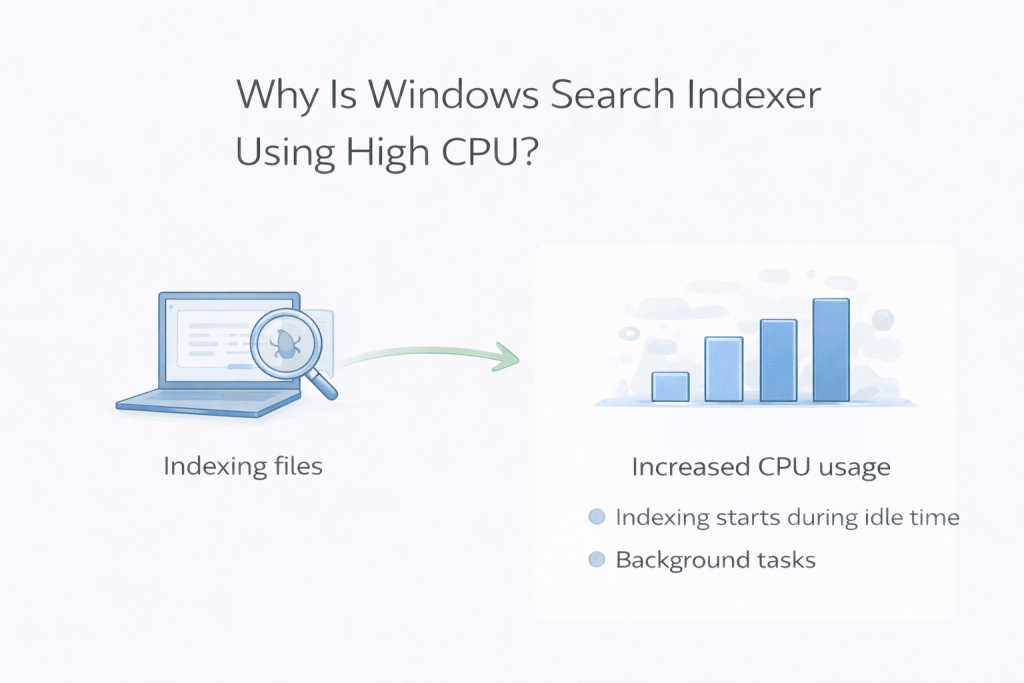
Windows Search Indexer often shows up in Task Manager at exactly the moment you expect your PC to be doing nothing. Seeing it use CPU while the system looks idle can make it feel like something is constantly running in the background.
In a sense, that’s true — but it’s usually intentional and harmless.
Windows Search Indexer exists to make searching fast and reliable. To do that, it scans files and keeps an index of what’s on your system. Windows deliberately runs much of this work during idle time so it doesn’t slow you down while you’re actively using the PC.
What’s Normal and What Isn’t
It’s completely normal to see higher CPU usage from Windows Search Indexer:
After adding, moving, or editing lots of files
After Windows updates
On a new or recently reset system
In these cases, indexing activity should rise for a while, then gradually settle down once the scan completes.
It’s more concerning if indexing appears to never finish and CPU usage stays high for many hours, especially when nothing on the system has changed.
Why It Often Feels Worse Than It Is
Indexing doesn’t run continuously. It works in short bursts, pauses, then resumes. When the PC looks idle, those bursts stand out more than they would during normal use.
Because there’s no visible app causing the activity, it can feel unnecessary — even though it’s improving future search performance behind the scenes.
Why Task Manager Can Be Misleading
Task Manager shows what’s happening right now, not the overall impact. Windows Search Indexer may briefly jump to the top of the list, then drop back down moments later.
A quick spike doesn’t mean your system is under strain. What matters more is whether usage steadily declines over time.
How Long Indexing Usually Takes
Most indexing tasks finish within minutes on smaller systems. On PCs with lots of files — or after major updates — it can take longer, sometimes a few hours.
Once indexing completes, CPU usage typically returns to normal without any intervention.
What Not to Do
Disabling Windows Search Indexer entirely often causes more frustration than it solves. Searches become slower and less reliable, and Windows may still attempt partial indexing in the background.
In most cases, the best option is simply to let indexing finish.
Final Thoughts
Windows Search Indexer using CPU while the system is idle is usually a sign that Windows is doing routine background work. If usage drops on its own, everything is working as intended.
If it doesn’t, that’s the point where further investigation makes sense — but for most people, patience is all that’s needed.
Seeing Antimalware Service Executable near the top of Task Manager can be unsettling, especially when your PC doesn’t appear to be doing anything. It can feel like the system is working hard for no obvious reason, which naturally leads people to worry that something is wrong.
In most cases, though, this behaviour is completely normal.
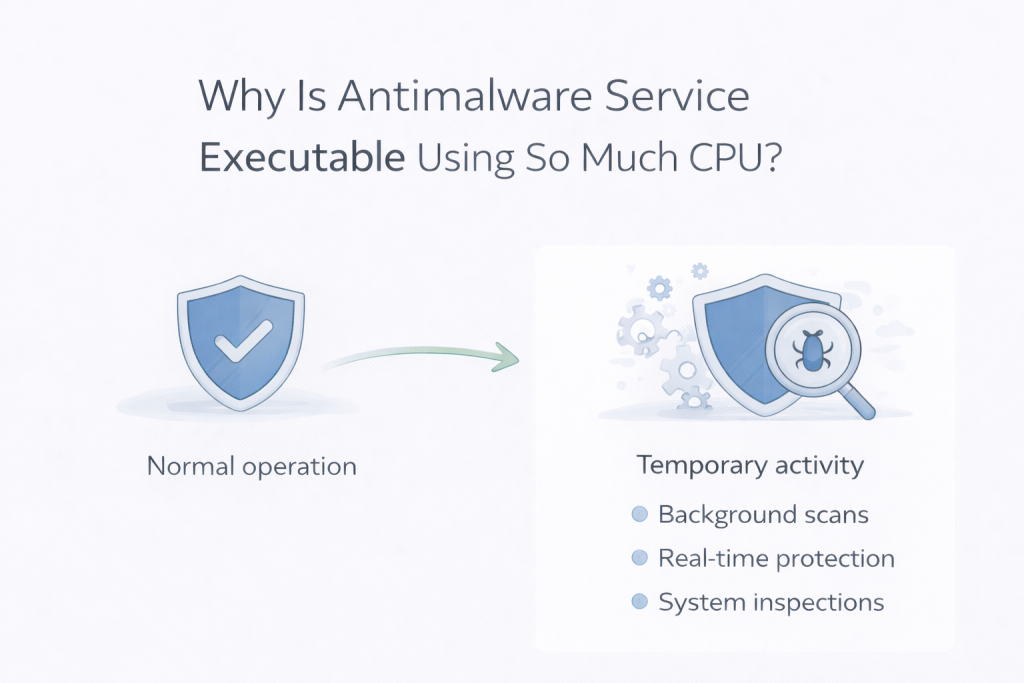
Antimalware Service Executable is part of Windows Defender, Microsoft’s built-in security system. Its job is to scan files, monitor activity, and respond to potential threats. Because these checks can use noticeable system resources, Windows prefers to run them during quiet moments, rather than while you’re actively using the PC.
What’s normal and what isn’t
Short bursts of CPU usage that rise and fall are expected. You’ll commonly see this happen:
Shortly after starting the PC
After Windows updates
When new files are downloaded or accessed
When the system has been idle for a while
What usually matters more than the spike itself is how long it lasts.
If CPU usage drops again after a short time and the system remains responsive, there’s typically nothing to worry about.
It becomes less normal if usage stays high for a long period, fans run constantly even while the PC is idle, or basic tasks feel sluggish long after startup. Duration and system feel matter more than the number you see in Task Manager.
Why it often feels worse than it is
When nothing is open, any background activity stands out. There’s no visible program to blame, so even moderate CPU usage can feel alarming.
Windows uses idle time deliberately. When you stop interacting with the system, Defender takes that opportunity to scan files and check activity without interrupting you later. From your point of view, it looks like the PC suddenly got busy. From Windows’ point of view, it picked the least disruptive moment.
This is why the issue often appears when the system is otherwise quiet.
Why Task Manager can be misleading
Task Manager shows snapshots and averages, not intent.
Defender may briefly spike CPU usage, finish a scan, and then drop back down — all within a short window. If you open Task Manager at the wrong moment, it can look like a sustained problem when it’s actually a temporary task already finishing.
Watching it for a few minutes often shows the usage rise, fall, and disappear without intervention.
Common reasons Defender becomes active
There are several everyday reasons Antimalware Service Executable may suddenly start using more CPU:
Scheduled background scans
Checking newly downloaded or updated files
Re-scanning system files after Windows updates
Catching up on security checks after idle time
None of these automatically indicate a threat. They’re part of routine protection.
When it usually settles down
In most cases, Defender activity completes on its own.
It often settles:
Within a few minutes
After a background scan finishes
Once you start using the PC again
After Windows completes maintenance tasks
Even after larger updates, it usually resolves without action.
When it’s worth looking closer
It may be worth investigating further if:
CPU usage stays high for hours without settling
The system feels slow all the time, not just briefly
Fans run loudly even long after startup
The behaviour happens constantly, every day
In those cases, the issue is usually related to system state or configuration rather than malware itself.
What not to do
It’s tempting to disable Defender or install third-party “security optimisers”. These often cause more problems than they solve and can reduce protection without improving performance.
Avoid force-ending the process, and avoid piling on extra security software unless there’s a clear reason. Defender restarting itself or repeating the behaviour is common and not a sign of failure.
Final thoughts
Antimalware Service Executable using CPU while the system is idle is usually a sign that Windows is working as intended, not that something is wrong.
If usage rises briefly and then settles on its own, the best response is often to leave it alone. Windows is simply using quiet time to keep the system protected — even if it doesn’t always look reassuring while it does it.
Opening Task Manager and seeing most of your RAM already in use can be unsettling, especially if you don’t have many apps open or at idle. It often feels like something must be wrong — or that Windows is using more memory than it should.
In reality, high RAM usage on Windows 11 is often normal. Modern versions of Windows are designed to use available memory aggressively to keep the system feeling responsive. The trick is knowing when that usage is expected, and when it points to a real problem.
How Windows Uses RAM
Windows treats unused RAM as wasted RAM. If memory is available, the system will use it to:
Cache frequently used files
Speed up app launches
Improve overall responsiveness
This means it’s common to see a large percentage of RAM in use even when the system appears idle.
👉 If you’re seeing high usage when nothing is open, this explains why:
Some apps continue using memory even when you’re not actively using them.
Browser tabs
Modern browsers can consume large amounts of RAM, especially with many tabs open.
Memory leaks
Occasionally, a program fails to release memory properly, causing usage to grow over time.
Insufficient RAM
On some systems, particularly with 8GB or less, Windows 11 can simply run out of breathing room.
How to Check What’s Using Your RAM
Press Ctrl + Shift + Esc
Open Task Manager
Click the Memory column
Look for apps using unusually large amounts of RAM
This usually makes the cause obvious.
Simple Ways to Reduce RAM Usage
Close unused apps and browser tabs
Restart the PC to clear accumulated memory usage
Disable unnecessary startup programs
Check for updates to misbehaving apps
If RAM usage drops after a restart, it’s often nothing more than normal buildup.
Do You Need More RAM?
If high memory usage regularly slows your system:
8GB can be limiting on Windows 11
16GB is a comfortable baseline for most users
Heavier workloads may need more
Adding RAM is one of the simplest ways to improve overall performance.
Final Thoughts
Seeing high RAM usage on Windows 11 isn’t automatically a problem. In many cases, it’s a sign the system is using memory efficiently.
If performance is good, there’s usually nothing to fix. If things feel slow or unstable, checking what’s using memory — and how much RAM you have — is the best place to start.
If you’ve opened Task Manager and seen Windows Explorer sitting high on the CPU list, it can be confusing. Explorer isn’t an app you actively “run”, so it’s not always obvious why it would be using noticeable system resources.
In many cases, high CPU usage from Windows Explorer is temporary and harmless. Less commonly, it can point to something in the background that isn’t behaving as it should. Or even windows defender and other background process.
What Windows Explorer Actually Does
Windows Explorer isn’t just the file browser. It’s responsible for a lot of the Windows interface, including:
File Explorer windows
The desktop
The taskbar
File previews and thumbnails
Because of this, Explorer is always running in the background, even if you don’t have any folders open.
Common Reasons Windows Explorer Uses CPU
File thumbnails and previews
When you open folders with lots of images, videos, or documents, Explorer generates previews. This can temporarily push CPU usage up.
Search and indexing activity
Explorer often works alongside Windows Search, especially when you’re browsing large folders or recently changed files.
Context menu extensions
Third-party apps can add options to right-click menus. Some of these extensions are poorly behaved and can cause Explorer to spike CPU usage.
Stuck or corrupted processes
Occasionally, Explorer gets stuck trying to read a file or folder and doesn’t recover properly on its own.
When High CPU Usage Is Normal
Explorer CPU usage is usually nothing to worry about if:
It spikes briefly, then drops
It happens when opening large folders
Performance returns to normal after a short time
This is similar to other cases of high CPU usage when the system is otherwise idle, where background work simply finishes on its own.
Explorer stays near the top of CPU usage constantly
File Explorer feels slow or unresponsive
Fans run loudly even when nothing is open
In those cases, something may be looping or failing in the background.
Simple Things to Try First
Restart Windows Explorer
Open Task Manager
Find Windows Explorer
Right-click → Restart
This often clears stuck behaviour immediately.
Restart the PC
It sounds basic, but it resets Explorer completely and fixes many temporary issues.
Check for Windows updates
Explorer issues are often resolved through system updates, especially after feature updates.
Final Thoughts
Seeing Windows Explorer use CPU can look worrying at first, but it’s often just doing its job. Short spikes are normal, especially when browsing files or opening folders.
If usage doesn’t drop, restarting Explorer or the system usually brings things back to normal without further troubleshooting.
If you’ve opened Task Manager and noticed Windows Defender using more CPU than you expected — especially when your PC is idle or not doing anything — it can be a bit unsettling. Seeing a security process working hard in the background often makes people worry that something’s wrong.
In most cases, though, this behaviour is completely normal. Windows Defender is designed to do a lot of its work when you’re not actively using the system. The key is knowing when it’s behaving as expected, and when it might need attention.
Why Windows Defender Uses CPU When Your PC Is Idle
Windows Defender takes advantage of idle time to run background scans. From Microsoft’s point of view, this is the least disruptive time to check files and keep the system protected.
You’ll usually see this activity listed in Task Manager as Antimalware Service Executable. CPU usage may rise for a short period, then gradually fall again once the scan finishes.
That rise and fall is normal.
When This Behaviour Is Nothing to Worry About
It’s very common to see Defender use CPU after things like:
Starting your PC
Installing Windows updates
Downloading new files
Connecting an external drive
If CPU usage:
Spikes briefly
Slowly drops back down
Doesn’t noticeably slow the system
Then Windows Defender is simply doing routine background work.
When High CPU Usage Can Be a Problem
It’s worth taking a closer look if:
CPU usage stays high for a long time
Your fans run constantly while the PC is idle
The system feels sluggish even during simple tasks
In these cases, Defender may be repeatedly scanning the same files, or reacting to another background process that isn’t behaving properly.
How to Check What Defender Is Actually Doing
A quick look in Task Manager can tell you a lot.
Press Ctrl + Shift + Esc
Open Task Manager
Find Antimalware Service Executable
Watch CPU usage for a few minutes
If usage steadily drops, it’s usually best to leave it alone.
Simple Ways to Reduce Defender’s CPU Usage
If usage seems higher than it should be, a few basic steps often help:
Let the scan finish If Defender is already working, leaving the PC on for a while often resolves it.
Restart the PC This clears stuck background tasks and resets scanning behaviour.
Check for Windows updates Out-of-date Defender definitions can sometimes cause repeated scans.
Run a full malware scan Occasionally, genuine malware activity can trigger constant scanning.
Should You Disable Windows Defender?
For most people, no.
Windows Defender offers solid protection, and disabling it usually causes more problems than it solves. If CPU usage is only occasional, it’s best left enabled.
Final Thoughts
Seeing Windows Defender use CPU while your PC is idle can look worrying at first, but it’s usually just background maintenance happening at the right time.
If usage drops after a while, everything is working as intended. If it doesn’t, a quick check in Task Manager and a restart are often all that’s needed.